
The Decline of Liberal Humanism
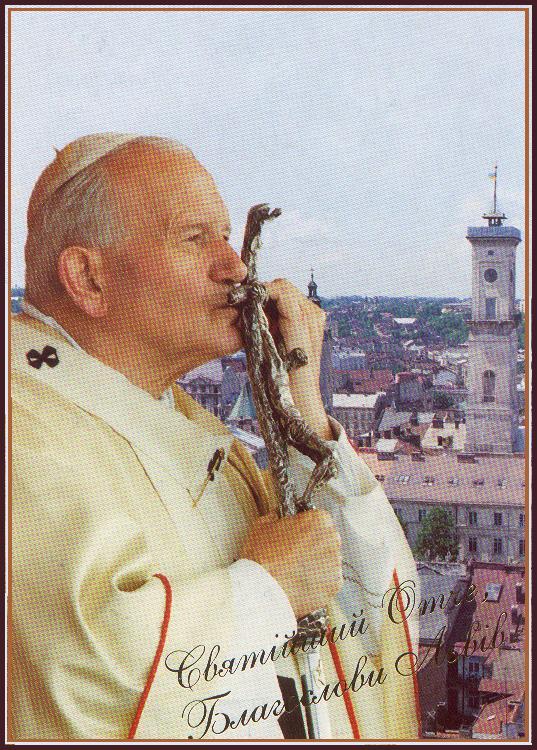
The lesson of history in this millennium now drawing to a close shows that this is the path to follow: it is necessary not to abandon the passion for ultimate truth, the eagerness to search for it, or the audacity to forge new paths in the search. It is faith that stirs reason to move beyond all isolation and willingly to run risks so that it may attain whatever is beautiful, good, and true.
[From the Encyclical Letter FIDES ET RATIO of the Supreme Pontiff John Paul II to the bishops of the Catholic Church on the relationship between faith and reason. V. 56. Sep 14, 1998].
Foreword
The term "liberal humanism" matured in the process of examining the causes of the crisis the Western world has been experiencing for over a century. Oswald Spengler characterized its essence as the "Twilight of Europe," referring to the discrepancy between the achievements of technological progress and the spiritual values that dominated Europe in his time. He had his own unclear understanding of these values, evident in his rejection of his own vision of the spiritual life of contemporary Russia, which he soon abandoned [SPENGLER OSWALD. 1920-1922]. The events of the Russian Revolution influenced not only Spengler but also the apologist for Russian spirituality, N. Berdyaev, who discerned a dangerous trend in the development of European humanism:
Humanism had its significance in the history of human culture, and it was necessary to pass through it. But the final fruits of humanism, as an abstract principle, destroy humanity; they are suicidal (BERDYAEV N. 1923: 50).
These examples suggest that the assertion of a crisis is a subjective opinion, and if it is recognized as global, its various manifestations cannot be explained by a single fundamental cause, given the diversity of opinions in the context of the expansion of European liberalism, which, in essence, is precisely that cause.
The idea of comprehensive liberalism has been shaken by the failure of multiculturalism in Europe, which was an example of how liberal ideas could be put into practice (VERETEVSKAYA A.V. 2010: 30; TROFIMOV P.A. 2022: 59-60), and this policy most clearly reflected its fallacy. Reactions to this failure have varied, and advocates of multiculturalism, seeking a scientifically grounded answer to the cause of the failure, point to the shortcomings of various models of multiculturalism (VERETEVSKAYA A.V., 2018; HAIVORONYUK N.V., PRYIMAK B.I., 2019). The issue of the coexistence of different cultures is very complex and delicate, and it cannot be resolved within the framework of liberal humanism.
Nothing today more convincingly demonstrates the crisis of liberal humanism than the free world's helplessness in curbing Russia's aggressive policies. In the consumer society described by Baudrillard, the scale of values has shifted toward material well-being due to the lack of incentives to overcome the spiritual crisis that emerged in Europe a century ago. This carelessness has led to a distortion in the economic structure of Western countries, where the lagging military-industrial complex has failed to ensure a reliable defense against unexpected aggression. It seems paradoxical that, with the European Union's economy at $27 trillion, Europe cannot confront Russia, whose gross domestic product is $2 trillion, although such a possibility exists. To do so, it would only be necessary to use the frozen assets of the Russian Central Bank, which is hampered by the understanding of the rule of law that guides the European Council. This would be fair if Russia also adhered to the principle of the rule of law, but this is not in its tradition:
It seems that for the overwhelming majority of Russian society, the idea of the existence of rights that cannot be renounced is simply incomprehensible (if not hostile), and such a situation makes the normal development of Russian law extremely problematic in conditions where the development of modern technologies actualizes precisely the issue of rights and their boundaries. But the very attempt to resolve legal collisions that arise on the path of implementing the achievements of scientific and technological progress in life can end tragically if there are no people capable of fighting for the option of their resolution that is focused on the individual, and not on the interests of individual political groups or business structures [POLYAKOV ANDREY. 2019: 46].
Taking advantage of this state of public consciousness, Russia's political leadership sees no problem in violating international law, while Western politicians, in turn, are guided by the internalized and prevailing liberal sentiments in society. However, the rule of law must not only be preached but also defended. Russia's long-standing confrontation with the West has already assumed a catastrophic military form and demands decisive action. The principle of the rule of law is unshakable; without it, the existence of human society is impossible, and its philosophical foundation does not require revision. The very understanding of law and the liberal doctrines associated with it requires revision, and the global intellectual elite must recognize this. The successes of right-wing and far-right parties in Europe demonstrate this need. Thus, there is every reason to speak not of a crisis, but of a decline in liberal humanism, and it is precisely in this conviction that Russia confronts the West. In a review of the collection of articles "Russia as a Civilization of the Future," we read:
The problem of Russia's emergence as a civilization and the definition of its civilizational contours in the 21st century is becoming particularly acute in the international context of the centuries-old confrontation between East and West, which is currently heating up again. Now, when Russia is forced to rebuild and, most importantly, defend its sovereignty and national interests in the difficult context of increasing information aggression from the EU and the US, compounded by internal economic and social problems, the search for a solid foundation for the country's sustainable development is becoming increasingly urgent (SPIRIDONOVA V.I. 2020: 108).
In such a situation, the need to improve an effective mechanism for ensuring the peaceful and sustainable development of human civilization becomes increasingly clear. The current mechanism testifies to the mental exhaustion of that part of humanity destined to be its vanguard. War has the same causes as the belief in the unlimited potential of artificial intelligence.
Two world wars have already led to the search for ways to exercise collective control over the global order. The United Nations was created to maintain and strengthen international peace and security. This organization has demonstrated its ability to support mechanisms for international cooperation on issues such as healthcare and culture, but has proven incapable of maintaining discipline in international relations. The diversity of historical experience and socio-political structures among the world's states greatly complicates the problem of their peaceful coexistence. The regulation of their interactions must be based on a scientific foundation, and this desire is reflected in the development of the idea of global governance.
Knowledge of the patterns and causes of historical phenomena will be more complete the broader the period of human development studied, or more specifically, the deeper our knowledge of prehistory, for which reliable evidence has not survived. The search for specialized methods of understanding this period is precisely what Pope John Paul II spoke of. In prehistory, humans and human society developed organically according to God's plan, and humans did not yet have sufficient opportunities to influence this process. Humanity's most important achievements, such as the invention of language and artificial tools, the use of fire, and the discovery of self-awareness and that of others, were made precisely in antiquity. Moreover, speech was the most ancient achievement and one deeply rooted in our genetic heritage (POPPER KARL R. 1988: 37). The memory of human achievements is preserved in the myths and legends of many peoples. Accordingly, historical linguistics and mythology must answer the question of the extent to which these human inventions were divinely inspired. Having reviewed the state of contemporary philosophical thought, one can agree with the Australian scholar:
Those scholastics who, in the name of professionalism, deny the possibility of characterizing broad historical sweeps are simply rejecting the possibility of there being the order of long durations because it does not exist in the trivia amongst which they compulsively immerse themselves [GARE ARRAN. 1996, 72].
This criticism also applies to the work of the famous American philosopher with the pretentious title "The End of History," published in 1992. In this book, the author defends the idea of liberal democracy as the "end point of the ideological evolution of humanity" and "the final form of government in human society," thereby becoming "the end of history" (FUKUYAMA FRANCIS. 2004). Fukuyama's conclusions were immediately subject to great doubt, especially in Russia, but in America, a well-founded refutation appeared only a quarter of a century later (LEVITSKY STEVEN, ZIBLATT DANIEL. 2018). The title of the book, "How Democracies Die," indicates its content, but it does not contain any fundamental proposals. The late emergence of criticism of the democratic form of government can be explained by its popularity among the masses, and from the criticism, one can understand that it is the use of populism for political purposes that leads democracy to death.
In Russia, things are different; democracy is far less popular there than in the West. Russian philosophers have not embraced the idea of the ultimate goal of historical development being the widespread establishment of liberal democracy, but its replacement can only be seen in veiled form. A. L. Nikiforov, chief researcher at the Institute of Philosophy of the Russian Academy of Sciences, examined three possible scenarios for human development in the coming decades, following the ideas of those studies. In his opinion, all of them will lead to the inevitable demise of humanity. While largely agreeing with the authors of these scenarios in their critical assessment of the global situation, he believes that only European civilization has reached the end of its existence, while Russia and, obviously, other countries can avoid such a tragic fate [NIKIFOROV ALEKSANDR. 2021: 3]. There are grounds for this conclusion. Liberal humanism contradicts the laws of nature. Evidence of this is the growth of "genetic load" in Western countries. This phenomenon, named by John Haldane (1892-1964), practically means the preservation of low-viability individuals entirely in the spirit of liberal humanism. The threat of dangerous loads was first recognized in Europe, so there is no doubt that Europe will find a way to eliminate it. Perhaps they will draw on the ideas of a Russian philosopher who believes that liberalism should be replaced by a collectivist, communitarian ideology in the public consciousness (IBID: 93).
The confrontation between Russia and the West has a long history, rooted in the different forms of Christianity that emerged after the Schism of the Catholic and Orthodox Churches in 1054. Attempts to unite the two branches of Christianity only exacerbated the tension. Western rationalism was opposed by Eastern sensualism, and this fundamental rejection of Western culture was expressed in poetic form:
… all the most important aspects of life, the way of life, and culture of Western society are experiencing a serious crisis… The flesh and spirit of Western society are sick, and there is hardly a single healthy place or normally functioning nervous tissue in its body… We seem to be between two eras: a dying sensual culture, our radiant yesterday, and the future ideational culture created tomorrow. We live, think, and act at the end of a radiant, sensual day that has lasted six centuries. The rays of the setting sun still illuminate the grandeur of a bygone era. But the light is slowly fading, and in the thickening darkness, it is increasingly difficult for us to discern this greatness and look for reliable landmarks in the approaching twilight. The night of this transitional era begins to fall upon us, with its nightmares, frightening shadows, and heart-rending horrors. Beyond its borders, however, we can discern the dawn of a new great ideational culture, welcoming a new generation – the people of the future (SOROKIN P. 1992: 427).
The Catholic Church also did not remain united. Its Reformation was associated with a particular kind of rationalism that developed among more northern peoples and manifested itself in both the spiritual and material spheres. Heinrich Heine, in his work "On the History of Religion and Philosophy in Germany," argued that Christianity ultimately took one form or another in Europe depending on the popular faith that preceded it. In the north, this faith was generally more pantheistic than in the south, with many natural phenomena and elements deified. The adoption of Christianity transformed the adored nature into a demonic one. However, while this transformation could not be easily and fully accepted in the naturally cheerful South, in the north, the devil's world became as stern and gloomy as northern nature itself. It was precisely this difference in perceptions of the Antichrist, according to Heine, that sparked the Reformation (HEINRICH HEINE. 1966, 60-70).
The further development of rationalism in Western Europe was reflected in the liberalization of public life, along with the impoverishment of its spiritual content. This led Oswald Spengler to predict the decline of Western Europe, but he failed to recognize the hidden shortcomings of liberal democracy. Indeed, democracy is essentially just one form of government that should, in principle, ensure human progress, and historically, it does not appear dominant, despite its increasing prevalence. Certainly, there should be no return to primitive forms of government, but democracy must be modernized and improved, for, contrary to Fukuyama's assertion, it does have internal contradictions. Fukuyama doesn't delve deeply into history, and he also lacks the same knowledge that many other philosophers of the past lacked, such as Hegel and Kant, in whose footsteps the American philosopher follows (FUKUYAMA FRANCES. 2004: 13). The need to "understand the Hegelian concept of man or human nature" (IBID: 232) nowadays looks like an anachronism. Enriched by the results of my research, I hope that my thoughts will fit into the macro-sociological paradigm of civilizational analysis if it is done retrospectively.
Manifestation of a global systemic crisis
There is currently a close interaction between science and business, but it does not solve the world's existing problems without taking into account the subtleties of the moral component of human activity. Without this, businesses are experiencing cyclical crises, which the world has become accustomed to and solves using various methods, including military ones. In December 2017, the Club of Rome presented its 43rd report, entitled "Come on!", which begins with the statement that everyone knows that the world is experiencing a crisis, and everyone also knows that crises can be cyclical. However, the authors of the report rightly argue that this is not the case:
The crisis is not cyclical but growing. And it is not limited to the nature around us. There is also a social crisis, a political and cultural crisis, a moral crisis, as well as a crisis of democracy, ideologies, and the capitalist system (WEIZSÄCKER, von ERNST ULRICH, WIJKMAN ANDERS. 2018, 2).
Other thinkers conclude that the world is going through a global crisis, the essence of which is the loss of stability in the system of "Humanity". Each of them comes to this idea based on their analysis of events and phenomena in the world. A comprehensive analysis in the European-American context was made in the recently published work of a Czech philosopher (KOMAREK STANISLAV. 2020), and another scientist summarized the threats that the current crisis is fraught with:
A large (and growing) proportion of the population still lives in poverty and hunger; fertile soils are being depleted; pollution of land, air, and water adversely affects the Earth's inhabitants. As a result of global warming, the atmosphere becomes more turbulent, and many species of flora and fauna are dying at a rate that has not happened since the time of the Permian – the end of the Cretaceous period. The ability of the states to protect their citizens decreases as multinational organizations engage in disorderly trade in goods and services. The extraordinary spread of information technology has led to the fact that someone's decision to invest or the movement of capital can bring down the world markets and even sweep the government. Growing chaos in nature is accompanied by political chaos. The stability and reliability can be no question, but in fact, they were to be the result of scientific and technical progress. We suddenly found ourselves on the brink of a dark age, far more dangerous than the Middle Ages, for the disintegration of a global nature (BRIAN GOODWIN, 2008: 48-49. Translation from Russian).
Most recently, the democratization of technology and information has led to a completely unpredictable consequence — the emergence of such a frightening feature of the modern world as the democratization of violence. If previously the state retained a monopoly on the legitimate use of force and such inequality in the use of force between the state and a person ensured order, in recent decades, this state advantage has greatly weakened. Small groups of people are capable of carrying out large-scale terrorist acts that deal a serious blow to state power, making it difficult for it to focus on solving other problems, including those associated with the ever-increasing democratization of our lives. (ZAKARIA FAREED, 2004, 4).
Some scientists focus on other processes and phenomena that are not so obvious, but so potentially dangerous to humankind that they preclude the onset of a new "dark age" with the destruction of all modern cultures and civilizations. (FLECHTHEIM OSSIP K., 1988: 18. Translation from German). The consequence of scientific and technological progress has been the leveling of the individual, who is now dominated by features of consumers or producers.
Excessive consumption and the accompanying desire for wealth are considered by many scientists, following G. Vico, to be the main threat to the development of mankind, which the Marxist philosophers realized earlier than others.
The desire for wealth, embracing individuals and entire nations, leads to the opposite result – decay and death (cited from LIFSHITS MIKH. 1994: X).
Not so dramatically, but with an awareness of the hidden danger of the accelerated production of consumer goods, modern philosophers write:
Ultimately, the main price for a consumer society is the feeling of general uncertainty that it generates (BAUDRILLARD JEAN. 2006: 46).
As production intensifies, humans become appendages to machines, with a cultural and moral level corresponding to that machine. With the development of artificial intelligence, it is forgotten that it, too, is a machine that humans must use for their own spiritual development. Meanwhile, material values are becoming increasingly important in their lives, and hedonistic aspirations are beginning to dominate the behavior of the majority, especially as satisfying the need for pleasure becomes increasingly accessible.
Deeply and comprehensively considering the manifestations of the global crisis and reflecting on its causes, Alexander Voin comes to the following conclusion:
It is easy to see that, on the one hand, the basis of the global crisis is scientific and technological progress, which, providing humanity with enormous creative opportunities, also provides it with even greater destructive ones. On the other hand, the inability of modern mankind to foresee the long-term consequences of scientific and technological progress, as well as the inability of various groups of mankind: folks, countries, parties, religions, and other ideological trends, to find a common language among themselves and negotiate peacefully. The latter is due to the lack of a unified morality and value system accepted by all mankind, which is another important factor contributing to the instability of the human system. (VOIN S.M., 2016: 11).
Briefly defining this state of affairs, A.P. Nazaretyan characterizes it as a techno-humanitarian imbalance in which the means of cultural regulation do not correspond to the increased power of production technologies (NAZARETIAN A.P. 2004). Many outstanding minds, including Einstein, Fromm, Kapitsa, and Sakharov, have spoken about the dangers of rapid technological development without the necessary cultural regulators. Similarly, the American philosopher Chung-Ying Cheng views the world's current ecological and economic crises as a consequence of an ethical crisis that "is rooted in the absence and neglect of the integration of ethical values in human civilizations, as well as in the desire for one useful form of ethics to prevail over others, thus demonstrating the loss of humanity—the notion of the foundations of ethical thinking."(СHUNG-YING-CHENG. 2019, 28).
Chung-ying Cheng believes that Europe needs to learn from Confucian wisdom, arguing that Western science developed "in the direction of pious power without moral purpose, which inevitably led to two world wars" (IBID: 33). Europe has never been dominated by one complete ethical teaching like Confucianism. Christian ethics were too general and allowed different interpretations. The variety of philosophical teachings corresponded to the multiculturalism of Europe and had the result that European rationalism perceived only those ideas that were confirmed in practice. Accordingly, the branches of applied science began to develop fruitfully when the implementation of new ideas promised to bring certain benefits, and this developed technical progress, which in our time is proceeding at a rapid pace:
… today any useful innovation, say, in the field of information technology, instantly spreads across the planet, falling into the hands of the good and the evil, the smart and the stupid, just like rain from the sky once fell on everyone indiscriminately (KOMÁREK STANISLAV. 2020, 77-78).
However, in the humanities, the positive effect of the found truth does not show itself very soon. The discoveries in history and linguistics are not of interest to the general public, and specialists are not interested in supporting new ideas if they do not ensure personal success:
… the careers of young scientists are often controlled by senior people nearing retirement, who are in many cases no longer active and therefore unfamiliar with new techniques. Career-savvy graduate students, no matter how imaginative, hesitate to work on something not understood by the powerful men and women of their field (SMOLIN LEE, 2002: 5).
Such a situation is typical for any branch of science, but in the historical sciences, where the attitude prevails, "anyway, no one will ever know how it was really" (read FORMOZOV A.A. 2005). Where practice cannot confirm the results of scientific research, verbal rhetoric, and sophistry, the demagogy of disinterested, narrow-minded retrogrades and careerists can distort, ridicule, and trample fruitful ideas, and the author himself will be labeled as a false scientist. This state of affairs is largely the cause of the techno-humanitarian imbalance that began to develop in Europe back in the Middle Ages:
Signs should also be gathered from the growth and progress of philosophies and sciences. Those that are founded in nature grow and increase; those founded in opinion change but do not grow. Hence, if those doctrines were not completely uprooted like a plant, but were connected to the womb of nature and nourished by her, what we see has been happening now for two thousand years would not have happened: the sciences stand still in their footsteps and remain in practically the same state; they have made no notable progress; in fact, they reached their peak in their earliest authors, and have been on the decline ever since. We see the opposite evolution in mechanical arts which are founded in nature and the light of experience; as long as they are in fashion, they constantly quicken and grow as if filled with spirit; at first crude, then adequate, later refined, and always progressing (BACON FRANCIS. 2002, LXXIV).
While in Bacon's time only attentive thinkers noted with concern the lag of the university sciences behind technological advances, in our time the techno-humanitarian imbalance has become obvious, yet the lag of the humanities behind technology is generally underestimated. However, one could speak not of the humanities lagging, but of the advancement of natural sciences over them, if we are to consider the discrepancy between the levels of development of these sciences. This advancement began with the Industrial Revolution, and its successful development depended on the presence of individuals of particular talent in England, the first among whom was the inventor of the knitting machine (ACEMOGLU DARON and ROBINSON JAMES. 2024: 258). He was followed by many similar inventors, which suggests that the Anglo-Saxons had more enterprising people than other peoples. Buckle commented on the cause of this phenomenon as follows:
The English aristocracy being thus forced, by their own weakness, to rely on the people,[299] it naturally followed, that the people imbibed that tone of independence, and that lofty bearing, of which our civil and political institutions are the consequence, rather than the cause. It is to this, and not to any fanciful peculiarity of race, that we owe the sturdy and enterprising spirit for which the inhabitants of this island have long been remarkable. It is this which has enabled us to baffle all the arts of oppression, and to maintain for centuries liberties which no other nation has ever possessed (BUCKLE HENRY THOMAS. 2013. V.2, 118).
The United States is heavily involved in technology today. All the most important technologies—mass production, standardized components, computing equipment, and much more—were invented by Americans, and all of this has ensured the United States' technological hegemony throughout the world (PROLEIKO V.M. 2013). This is particularly evident in plans for human colonization of the Moon and nearby planets. When interested parties seek or invest enormous sums of money in the preparation and implementation of deep-space flights, this seems unreasonable and futile for many reasons. Scientists dedicated to resolving practical issues of space exploration understand better than anyone the premise of such a grandiose human undertaking, but their voices remain unheard. Meanwhile, their arguments are not abstract but stem from the applied content of set, stability, and reliability theory. Undoubtedly, the impetus for the exploration of outer space is its exploration. Putting aside simple curiosity and personal ambition, this exploration can have socio-economic, scientific, and political implications. Regarding the socio-economic goal, it must be acknowledged that currently, in spaceflight, we "must expend Earth's already limited resources without receiving from space even an equivalent amount of energy or matter" (VOKIN G.G. 2015: 20). In other words, hoping for the commercialization of space is nothing more than a thoughtless waste of money. Moreover, the conditions for human existence, its "niche," exist only on Earth, and there is currently no need or prerequisite for acquiring the qualities that would allow us to transcend this realm of existence.
The most important scientific goal should be the existential-pragmatic aspect of its study, which is inseparable from the study of life on Earth in its connection with cosmic processes. This can include not only the origin and developmental history of a cosmic object like Earth, but also the appearance of humans on it and their spiritual and physical development—that is, the study of the formation and development of human civilization in its various manifestations. Such a goal is purely humanistic, that is, it falls within the class of humanistic sciences. Only a few scholars pay attention to the need to consider the natural and human sciences in close connection:
As is known, the scientific community has divided the sciences into natural and humanities. However, dialectical thinking does not accept such an artificial division, because the objects of research – Nature and Society, by and large, are one, while they are parts of one whole – the terrestrial and cosmic segments of the noosphere. The results obtained in the natural sciences acquire true meaning only when the criteria developed in the humanities are applied to them (VOKIN G.G. 2015, 4).
The United States cannot be accused of neglecting the scientific purpose of space exploration, but overall, the humanities are given less attention in the United States than in Russia. At the very least, the successes of Russian linguists in historical linguistics are particularly notable. The resulting imbalance in our understanding of the relationship between the humanities and the natural sciences could lead to a situation where the question of survival becomes more important than the conquest of space, forcing us to pursue what we previously neglected. An analysis of human space activities shows that achievements in this area are accompanied by a significant increase in the number of problematic issues, including those of a humanitarian nature. Their solution is impossible without taking into account the inseparable unity of the natural and humanitarian aspects of space exploration.
The political goals of space exploration, in the context of the systemic crisis that characterizes the modern world, can only be a rash adventure, calculated for external effect without a convincing ontological justification, which is typical of international politics in general. Even leaving aside politics, the importance of philosophical thought in the development of the natural sciences is underestimated. Few people understand it intuitively or arrive at it by chance, as exemplified by Oersted's discovery of electromagnetism in 1820. His fascination with Friedrich Schelling's teachings on the integrity of the world and the universal interconnectedness of phenomena led him to the idea that electric current could influence the behavior of a magnetic needle. His experiment, which confirmed this idea, resonated widely among physicists and paved a new path for research (KUDRIAVTSEV P.S. 1982: 181-183). The close connection between all spheres of scientific knowledge, along with their expansion, becomes less noticeable, and failure to understand this connection caused the emergence and spread of a phenomenon called by Max Weber in German "Entzauberung der Welt", which can be roughly translated as "getting rid of the spell, demythologizing the world." The essence and consequences of this phenomenon are briefly defined as follows:
… scientific and technological progress and the growing influence of the natural sciences lead to a reliance on fundamental predictability and technical manageability of the world where gods and other unpredictable forces will be out of work. A selectively engaging God appears no longer plausible absolutely (HOFFMANN JULIA 2014: 1).
However, if we talk about faith in God and His influence on the behavior of people, then it should be borne in mind that it does not extend to the bulk of them, who perceive only His image, but in no way the Idea, which this mass was never touched by, as well as the problems of sin and personal salvation (BAUDRILLARD JEAN. 1983: 6). And this situation is also a new problem with the ever-increasing democratization of human societies:
… it is not a question of mystification: It is a question of their (masses -VS) own exigencies, of an explicit and positive counter-strategy – the task of absorbing and annihilating culture, knowledge, power, the social. An immemorial task, but one which assumes its full scope today. A deep antagonism which forces the inversion of received scenarios: it is no longer meaning which would be the ideal line of force in our societies… (IBID: 11).
It's difficult for people to abandon traditional views and habits; they are prone to inertia in their thoughts and behavior. For radical change in human society to occur, recognized and influential authorities must interpret the world around them and humans within it in a new way, moving away from the mechanistic notions of them that developed in the recent historical era.
Ideas originating in Europe are accepted and spread throughout the world, and within Europe itself, they develop and take on new forms. However, Europe is currently experiencing a certain moral crisis, and it can be assumed that some old ideas, taken to extremes and absolutized, have acquired a threatening character for world civilization:
As we nervously approach the end of the millennium, there is ever more confusion and misgivings. It seems that Europeans (no matter how they mean them) are completely lacking in confidence in what, namely, ultimately should be the subject of their loyalty, and they do not understand the most desired level of effectiveness of power, sovereignty, and citizenship: the city, region, national state, or newly formed European Confederation (HEFFERNAN MICHAEL. 2011: 9-10).
Despite the increasingly obvious signs of a systemic crisis, no serious efforts are being made by the authorities of the world's leading states to avoid it. All sorts of gatherings of influential people around the world, aimed at adjusting national policies and international affairs, focus more on issues of the global economy, finance, and emerging technologies. For example, representatives of the social sciences and humanities are not even invited to the Bilderberg meetings.
The problem of the future
Thinking about such circumstances of human civilization, we ask ourselves the question: where are we going and what will happen next? The German philosopher Rüdiger Lutz gave the following answer to this question: "The future is open, indefinite, and ambiguously predictable, and this fact also gives us a chance" (LUTZ RÜDIGER, 2000: 9). However, those who undertake the search for ways to an excellent future must recognize that the primary task is to decide whether the history of mankind has any patterns that lead it to a specific goal. Isaiah Berlin believed:
The notion that history obeys laws, whether natural or supernatural, that every event in human life is an element in a necessary pattern, has deep metaphysical roots; it is nourished by a passion for the natural sciences, but this is not its only or even its main source.( BERLIN ISAIAH. 1992, 147).
Many scientists, including philosophers, sociologists, and environmentalists, believe that another psychology and a new morality can provide the salvation of mankind that can only be developed in the humanities. Meanwhile, the backwardness of the humanities led to the development of their virtual-simulative nature through the further elaboration and deepening of false theories that arose at an early stage in the formation of certain scientific fields. This character is also fueled by the political interests of the practice of priority financing of scientific institutions, which has been going on since the days of Nazi Germany and the Soviet Union.
Thus, to chart the way to the future, it is necessary first of all to overcome the techno-humanitarian imbalance due to the intensive development of the humanities sciences. To the realization of this need, an increasing number of thinkers will come, and this process is already noticeable. In one of the latest works devoted to the future of science, the very content of the articles is indicative: "In the Shadow of Culture", "What Children Will Teach Scientists", "Toward a Theory of Moral Development", "The Future of Happiness", "What Is Life?", "Are We Going to Get Smarter?" [BROCKMANN John (Ed). 2008]. However, the task set for the humanities seems to be very difficult, looking at their current state:
Each of the humanities: philosophy, sociology, psychology, macroeconomics, etc., is divided into many schools, between which there is no common language, and they are not only unable to agree on which of the competing theories is true, but, as a rule, don't try to do it. As a rule, each school ignores the others [VOIN A.M. 2016: 19].
Alexander Voin sees the reason for this state of the humanities and, as a consequence, a whole series of global problems in the crisis of the rationalistic worldview, which in turn is caused by the crisis of classical rationalism.
Complaints about life, the idealization of the past, and expectations of the end of the world are not new in the history of mankind and have accompanied it since deep antiquity. No such folk existed whose stories, passed down from generation to generation, would not contain attempts to forecast the further fate of the people. Many thinkers of past centuries asked for an answer to this question. But just as the past of mankind for a long time seemed to people in the fantastic world of myths and legends, the future was also fantastically imagined either in the form of religious teachings about the "end of the world", or in the form of social utopia (BESTUZHEV-LADA I.V. 1968: 16). Even some outstanding thinkers of antiquity, when they looked into the future, saw only a terrible apparition of the catastrophe. According to de Chardin, an age-old man felt anxiety because it is connected with thinking, and obviously, anxiety helped him to eliminate the perceived danger in advance. On the other hand, social injustice, difficulties, and problems of real life gave rise to dreams in the minds of individual thinkers about the bright future of mankind, which were formed into utopian theories. Thomas More, Tommaso Campanella, Henri Saint-Simon, Charles Fourier, and Robert Owen can be reproached for having more imagination than scientific thought in their works, but they can not be denied the lack of optimism and belief about the future of mankind. Such a positive approach to the problem led them to some ingenious conjectures that influenced the further development of socio-economic theories, although it can not be said that they did not lose some utopian traits. The popularity of utopian works is explained by human psychology:
Faith in the process of learning provides an effect similar to the placebo effect in medicine, when a disease is treated with a substance that has no medicinal properties. In science, the role of placebo is played by false theories that people believe in, given that scientists have more authority than ordinary people (STETSYUK VALENTYN. 2024: 6).
For a long time, there have been and continue to exist other ideas that both supported and denied the possibility of the existence of any patterns in historical events. From the time of Giambattista Vico (1668-1744) and up to the Second World War, "it was usually believed that the development of human societies is natural" (KOMAREK STANIASLAV. 2020: 28), but over time, philosophical thought has become more inclined to believe that the course of historical events is more contingent:
The idea that history obeys an "iron historical pattern" – once so popular, but extremely harmful – has been replaced by the belief that contingency plays the main role here (IBID: 27).
Such peremptoriness in Komarek's judgment suggests that philosophical thought in Europe has evolved from one extreme to the other. The adherents of randomness in the historical process see in the future "multiple modernities" in the world (KNÖBL WOLFGANG. 2011, 9-22). However, a critical discussion with supporters of "social teleologism" continues:
The ideas of historical contingency, discontinuity, the creativity of action, the openness of the future, uncertainty, and uncertainty in the development of societies are opposed to evolutionist and structuralist concepts (PROZOROVA YULIA. 2021: 236).
In this discussion, it becomes obvious that the multiplicity of modernities must have its boundaries, and its implementation will be complicated by the absence of "categories and instruments that can grasp the phenomenon of historical contingency" (KNÖBL WOLFGANG. 2011: 10). In this case, one cannot do without invoking the theory of probability. However, it should be noted that this theory itself, which seems to be completely based on mathematics, is not purely mathematical:
Mathematics (by which I shall mean pure mathematics) has no grip on the real world; if the probability is to deal with the real world it must contain elements outside mathematics; the meaning of 'probability' must relate to the real world, and there must be one or more 'primitive' propositions about of real word, from which we can then proceed deductively (i.e. mathematically) (LITTLEWOOD J.E. 1953: 54).
Littlewood further argues that this primary proposition, which he calls the "axiom of probability", cannot be proved either mathematically or philosophically, as he demonstrated by contradictions in the proofs in the form of a vicious circle (IBID, 60-62). This resembles attempts to prove God's existence and also suggests that God controls probability in the real world. Littlewood himself does not draw such a conclusion, does he even hint, but he points out that the "axiom of probability", although it lies outside of frequent mathematics, is not entirely connected with the real world; it is about the real world what admits of no deductive proof. In this regard, attention should be paid to accidental discoveries in physics, such as Oersted's aforementioned discovery, as well as Röntgen's discovery of a special type of electromagnetic radiation and Becquerel's discovery of radioactivity. These discoveries were not directly related to the existing knowledge of their time, meaning that the recognition of previously unknown phenomena occurred outside the real world of the time.
When we talk about random events, we cannot be sure that they do not happen according to the will of God. Quantum mechanics, which solves the contradictions between the indeterminate transitions of an electron from orbit to orbit and its deterministic motion in orbit, using the probability factor, was not accepted by A. Einstein only because, in his words, "God does not play dice". But quantum mechanics, describing nuclear processes using the theory of probability, does not deny that God just "rolls the dice". Fans of gambling games based on probability know the law "newbies are lucky", that is, people who sit down for the first time often win. It is impossible to explain this phenomenon without the assumption that someone controls the laws of probability. It does not lend itself to experimental verification because, just like in quantum mechanics, measurement can influence the process.
Scattered facts and events in the modern world require a generalized definition, which should help find the cause of the unsightly state of the world and suggest ways to eliminate it. The initial conclusion might be:
Today, no one doubts that the modern global crisis is systemic and manifests itself not only in the economy but also in all spheres of people’s lives and activities. As economists assure, even with the most favorable outcome of the crisis, we will have to not only give up a lot but also, most importantly, change our worldview, learn to live in a new way, and look into the future in a new way. In terms of its depth, the current crisis can only be compared with the crisis of the Upper Paleolithic, which ended with the Neolithic revolution, the crisis of late Antiquity, the collapse of the ancient slave system, and the crisis of feudalism (SHAPOVALOV V.A., VASILENKO V.V. 2010).
This conclusion was made even before the start of Russia’s armed aggression against the free world and, accordingly, the authors underestimated the scale of the global crisis. Everything suggests that in the history of mankind, there has never been anything similar to the catastrophic prospect that has now arisen. The modern world setup is such that it cannot protect itself from the absolute evil that is modern Russia. Such an assessment of this state may seem excessive, but the fact that a permanent member of the UN Security Council, called upon to guard world peace, resolves its ideological contradictions with Europe through military means cannot be characterized otherwise. It is this helplessness of the world that best speaks of the global crisis.
However, the diversity of the social structure and cultures of Europe over the centuries ensured its viability and successful development, and even in Russia itself, which opposed itself to the Western world, there was confidence in the effectiveness of the European experience of coexistence of diverse peoples:
The destruction of our culture and society, proclaimed by pessimists, is also impossible for the reason that the total sum of social and cultural phenomena of Western society and culture has never been integrated into one unified system. It is obvious that it has never been connected and cannot be disconnected (SOROKIN P. 1992: 433).
Thus, the historical experience of Europe already determines the direction of searching for ways out of the crisis, and in the process of further analysis, we will focus our efforts precisely on considering the features of the development of European history.
Both the study of history and observations in current life convince us that future events are, to a certain extent, determined by the past. The knowledge gained in childhood affects the further life path of a person; the capital accumulated by parents gives the best starting opportunities for their children; a language formed in the past affects the mentality of a distinct people in the present tense; practical experience in certain areas of human activity facilitates the assimilation and implementation of new achievements in science and technology; a loan taken from a bank determines a person's behavior for many years to come.
Contrary to the assertion of S. Komarek, determinism as a doctrine of general causality, interconnection, and conditionality of various phenomena and processes in human life and in the Universe unites the past and the future into one process; many thinkers recognize this and have used it in research, at least since the time of Newton and Vico:
The great physical tradition of Newton had necessarily been one of determinism, where a perfect knowledge of the universe at one instant is understood to involve perfect knowledge of its history throughout all time (WIENER NORBERT. 1956: 34.)
Without going to extremes, we will accept for further reasoning the principle of "limited indeterminism" (or "limited determinism") and assume that the existence of individual civilizations is a phenomenon to a certain extent indeterminate, depending on random factors, including freedom of human will, but the survival of some of them is a causally determined, non-accidental phenomenon. That is, we agree with the existence of both teleological and causal determinism. The best ratio between deterministic and indeterminate events is illustrated by coin-tossing results. If the fall of the coat of arms with each throw is a random event, then with a large number of throws, the proportion of their falling out will be a deterministic event – it will be equal to about half of the throwing attempts if the coin is symmetrical, and if it is asymmetrical, this part will be equal not to half but to the other also approximately constant. In this light, the views of modern philosophers can be interpreted more broadly, at least as follows:
Dominated in the XIX century, the paradigm of mono-determinism (something "ultimately") and unchanging one-pointedness (in the spirit of unconscious recognition of the "target cause" of Aristotle) of historical movement in world social thought has long been replaced by the idea of a multifactorial definition of the sociocultural process. His aspiration is not considered rigidly conditioned (unless, of course, we are not talking about obviously propagandistic and ideological doctrines that promise humanity a bright globalist future). It is assumed that the direction of movement is probabilistic. From an infinite number of contingencies and concrete actions of persons pursuing their own goals, it is dependent on which of the available possibilities and in what form will be a reality, what consequences it will lead to. History obeys a probabilistic logic (PAVLENKO Yu.V. 2004: 13).
Pavlenko is mistaken when speaking about the victory of the idea of multifactority in the socio-cultural process. Fukuyama, economically interpreting historical changes, sees the result of their orientation in the capitalist mode of production (FUKUYAMA FRANCIS. 2004: 15). There is no probabilistic logic in this conclusion, although capitalism itself presupposes a plurality of solutions to economic problems under the overarching principle of polymorphism. However, in practice, this principle must have its limits, which is evidenced, in particular, by the decline of the political line of multilateralism in Europe.
In other words, God, having endowed a person with free will, shows confidence in him and takes into account his initiative in the socio-cultural process, supporting the one that is most consistent with His plan. If we look at the world through the eyes of Spinoza, then we can think that, to a greater or lesser extent, He is present in every person. Probably, this dilemma also has no solution in philosophical categories. In the real world, probability in history is closely related to the principle of diversity, but diversity must obey a certain law.
Modern science substantiates the need for structuring human society, assuming the existence of patterns in the structure of the entire universe. Social existence is a continuation of natural existence, and when studying it, it should be kept in mind that certain laws operate similarly in nature and human society:
Therefore, scientific inquiry consists of understanding these laws. In this sense, we come closer to perceiving the fact that existence is hierarchical, has a history, and is in a process of constant formation, where complexity replaces simplicity. To what extent, in the process of scientific knowledge, we come closer to understanding this complexity is a crucial question of epistemology (VASILIEVA L.N. 2011).
The existing patterns in animate and inanimate nature can be described mathematically. Fractal geometry offers one such opportunity. The concept of fractal was introduced by B. Mandelbrot (MANDELBROT B. B. 1982). This term characterizes a geometric figure composed of parts similar to the figure itself. Many objects in nature exhibit fractal properties: clouds, tree crowns, snowflakes. In the human body, the circulatory system, the respiratory system, and even the human figure itself are fractal. Human society is also structured fractally, with its division into anthropological races, national cultures, and linguistic entities in the form of families, groups, dialects, and vernaculars. They are all structured hierarchically, but at each fractal level, their elements are equivalent. The animal kingdom is structured in the same way.
The humanities have accumulated a huge amount of evidence; however, as A. Neklessa rightly remarked, "increasing the amount of knowledge here, as in the case of quantum mechanics, does not simplify, but complicates the picture of the world, making it more uncertain" (NEKLESSA ALEKSANDR. 2019). The inability of the humanities to come to the truth using existing knowledge leads to attempts to synthesize the humanities and sciences in the first place by using mathematical methods. However, the possibility of mathematizing the humanities is limited by the fundamental absence of a “quantitative measure for the vast majority of concepts” in them (VOIN A.M. 2016) and the lack of necessary methods in mathematics itself. The existing situation should change; scientists predict a new flowering of mathematics in the next 50 years, both in its traditional sections and in the newly created ones. Among other things, by 2050, a mathematical theory is predicted to emerge that describes the interaction and dynamics of complex systems. It will be used in the sciences dealing with a large number of relatively simple components that interact with each other in simple ways. Such complex systems arise in biology, financial activities, sociology, and even in art and politics (STEWART IAN. 2008, 44-45). A similar system can also be created in linguistics to accurately determine the kinship relations of akin languages based on a large mass of their common features. The graphic-analytical method was used to study such a system (STETSYUK V.M. 1987), which is based on the construction of a special graph that has not yet been studied in detail in theory, but which can previously be called "weighted." The results obtained using this method provided some basis for the considerations presented here.
The future cannot be predicted in detail, given the presence of random external interventions. In this regard, it's worth considering the possibility of predicting physical processes, which can be paralleled in social life. A comparison of these processes reveals that the idea of the fundamental unpredictability of the future exists alongside the recognition of this possibility in the same work (PRIGOGONE, I. 1991). Pointing to the existence of strange (complex) attractors, Prigogine organized his thoughts as follows:
In a strange attractor, a system moves from one point to another in a deterministic manner, but the trajectory eventually becomes so convoluted that predicting the system's motion as a whole is impossible—it is a mixture of stability and instability. And, what's particularly surprising is that our environment, climate, ecology, and, incidentally, our nervous system, can only be understood in light of the described concepts, which take into account both stability and instability. This circumstance has attracted the keen interest of many physicists, chemists, meteorologists, and environmentalists. These objects are determined by strange attractors and, consequently, a peculiar mixture of stability and instability, making it extremely difficult to predict their future behavior (IBID, 51).
Although human evolution is characterized by a multitude of processes, a well-functioning system is characterized by forces and mechanisms that return it to stable motion after deviations caused by external influences (VOIN A. 2017). Such forces and mechanisms must also exist in human society. These forces are strange attractors. Anaximander expressed a similar opinion when he argued that there is a necessity or natural law that returns the elements of which the world is composed to equilibrium. This is precisely how Greek philosophers understood both cosmic and human justice (RUSSELL BERTRAND. 2001: 30).
Speaking of instability, Prigogine draws on an example from physics, although this topic should be considered more broadly, using the principles of cybernetics. This science studies the control patterns of complex systems, whether machines, living organisms, or societies, drawing on scientific paradigms that symbolically represent the structure of the world. Cybernetics operates with the phenomenon of feedback, which can be positive or negative. Positive feedback accelerates a system's response to control factors, but it can lead to system instability. Negative feedback, to varying degrees, restrains control factors and can make a system more stable. Humanity, as a complex dynamic system, is subject to feedback. The advancement of technology indicates an excessive influence of positive feedback, responsible for the accelerated development of a system driven by material interests. Thus, we can speak of the consumer society described by Baudrillard, in which the scale of values has been transformed toward the attainment of material well-being due to the lack of incentives to overcome a spiritual crisis.
To achieve sustainability, the system must address the restraining factors, which in human society are fear and conscience. Fear protects people from danger, blocking undesirable developments, but simultaneously inhibits innovations that could be positive.
Conscience regulates human behavior and actions without external coercion, in accordance with the meaning of existence. Conscience also appears in primitive humans, but this complex feeling is difficult to detect in prehistoric people's behavior because there is little clear evidence of its manifestation. Conscience, unlike fear, allows a person to gain self-confidence and discover dignity and a sense of self (PORSUGYAN L.R. 2010: 99). Also, unlike fear, the influence of conscience in human history has been inconspicuous. Moreover, there was even a belief that certain moral norms governing human behavior were immutable. Delving into this topic, Buckle pointed out that the circumstances that can cause our actions are extremely variable, but he suggested that there are constant circumstances that do not determine the nature of our actions. How changeable are circumstances, he called the measure, which he applied to moral impulses or prescriptions, he concluded how little they influence the development of civilization, being constant (BUCKLE H.T. 1863, Part 1, 134):
For there is, unquestionably, nothing to be found in the world which has undergone so little change as those great dogmas of which moral systems are composed. To do good to others; to sacrifice for their benefit your own wishes; to love your neighbour as yourself; to forgive your enemies; to restrain your passions; to honour your parents; to respect those who are set over you: these, and a few others, are the sole essentials of morals; but they have been known for thousands of years, and not one jot or tittle has been added to them by all the sermons, homilies, and text-books which moralists and theologians have been able to produce (BUCKLE HENRY THOMAS. 2013. V.1: 180)
In commenting on his statement, Buckle refers to Sir J. Mackay (Mackay's Religious Development, vol. ii):
That the system of morals propounded in the New Testament contained no maxim which had not been previously enunciated, and that some of the most beautiful passages in the Apostolic writings are quotations from pagan authors, is well known to every scholar; and so far from supplying, as some suppose, an objection against Christianity, it is a strong recommendation of it, as indicating the intimate relation between the doctrines of Christ and the moral sympathies of mankind in different ages (IBID: 180).
Sir Mackay mentioned the sympathies of humanity; this is psychology, and one could say they are immutable. And the idea of liberal humanism is quite sympathetic, which explains its spread throughout the world. This view was entirely in keeping with the spirit of the 19th century, consistent with the philosophical teaching of positivism, when many believed "that all problems, both personal and social, could be resolved if the forces of reason and goodness triumphed over the forces of ignorance and evil" (BERLIN ISAIAH, 1992: 85). Nevertheless, at various times, some thinkers attempted to understand this phenomenon. As an example, we can cite Kant's reasoning:
A man may use as much art as he likes to paint to himself an unlawful act, that he remembers, as an unintentional error, a mere oversight, such as one can never altogether avoid, and therefore as something in which he was carried away by the stream of physical necessity, and thus to make himself out innocent, yet he finds that the advocate who speaks in his favour can by no means silence the accuser within, if only he is conscious that at the time when he did this wrong he was in his senses, that is, in possession of his freedom; and, nevertheless, he accounts for his error from some bad habits, which by gradual neglect of attention he has allowed to grow upon him to such a degree that he can regard his error as its natural consequence, although this cannot protect him from the blame and reproach which he casts upon himself (KANT IMMANYEL. 2004: 110)
In the cited work "Critique of Practical Reason," devoted to questions of morality, Kant uses the word "conscience" only once, although it could have become key. He simply lacked the knowledge to understand the significance of conscience. It's likely he was unaware that the word "conscience" is absent from the Old Testament, which may indicate an underestimation of the importance of conscience in human life. The Russian theologian P.I. Kazansky knew this and asserted that manifestations of conscience in scripture are present when the word "heart" is used (VESELOVA E.K. 2009, 132). On the contrary, conscience is currently a fundamental and basic category of morality, and its influence extends to areas of human activity where, until recently, it was considered an alien phenomenon. This applies primarily to politics and business. However, in recent decades, global business has seen a trend toward recognizing the importance of conscience. The evolving concept of corporate social responsibility (CSR), characterized as "business with conscience," reflects business's awareness of its moral obligation to society. Thus, the growing influence of conscience on public life stretched over millennia, with milestones along the way being the attempts of thinkers to understand this phenomenon.
It's impossible to imagine that conscience could develop in humans solely under the influence of life circumstances and the external environment, amidst a constant struggle for survival. Conscience, as a human capacity for self-assessment, developed from a sense of shame, which restrains us from certain actions that may be considered unworthy in the eyes of others. However, shame and conscience are far from equivalent feelings; the difference between them is defined as follows:
Shame is a temporary feeling, while conscience is permanent. Moreover, a person who lives by their conscience experiences a stronger sense of shame, since shame without conscience loses its meaning and significance (PORSUGYAN L.R. 2010: 100).
Animals lack both conscience and shame, but primitive man already possessed it. His first clothing was a loincloth, and the newly emerging sense developed further within him. Even in the recent past, kissing in public was not accepted in Russian villages out of shame. This phenomenon forced Russian philosophers to seek an explanation:
Because of this feeling, the wildest and most undeveloped person is ashamed; that is, he hides every physiological act and recognizes it as improper that not only satisfies his desire and needs but, moreover, is useful and necessary for the maintenance of the species. Solovyov concludes that it is this fact of moral life that distinguishes man from all animals, and this is not accidental, because the feeling of shame is an indicator of difference from the lower nature… That is, through shame, a person bifurcates his nature into material and non-material – higher; seeks to separate himself from this lower, animal nature, and therefore, to become in the true sense of man (DRUZNININ V.I., SAMARTSEVA E.I. 2009).
Conscience also emerges in primitive man, but this complex sense cannot be identified in the behavior of prehistoric people due to the lack of clear evidence of its manifestation. However, progress in the appreciation of the importance of conscience can be observed in all modern religions. Its most profound understanding is expressed in the Pastoral Constitution of the Second Vatican Council, "Joy and Hope," which lasted from 1962 to 1965, in which we find the following words:
In the depths of his conscience, man detects a law which he does not impose upon himself, but which holds him to obedience. Always summoning him to love good and avoid evil, the voice of conscience when necessary, speaks to his heart: do this, shun that. For man has in his heart a law written by God; to obey it is the very dignity of man; according to it, he will be judged (9). Conscience is the most secret core and sanctuary of a man. There he is alone with God, Whose voice echoes in his depths (10). Wonderfully, conscience reveals that law which is fulfilled by the love of God and neighbor (11) (GAUDIUM ET SPES, 1965, 16).
The importance of conscience as a divine moral law has been noted, but generalities rarely reach the public consciousness, as even ordinary clergy do not fully understand it. Like any law, the moral law of conscience must also be proven. Although the sense of conscience cannot be taught, as it is a deeply personal state of the individual (PORSUGYAN L.R. 2010, 101), the voice of conscience is present to varying degrees in the heart of every person. It is possible to convince people that heeding it is in their own best interests. The French sociologist Gabriel Tarde argued that all social life is largely based on the instinct of imitation.
The evidence was overwhelming that in all the affairs of men, whether of good or of evil report, imitation is an ever-present factor; and to a philosophical mind the implication was obvious, that there must be psychological or sociological laws of imitation, worthy of most thorough study [TARDE GABRIEL. 1903: iv].
Imitation by people determines a certain level of prevailing morality in society. The only question is who can set an example of living not in fear of punishment, but in conscience, in accordance with an understanding of the meaning of one's existence. If humanity is currently in a state of systemic crisis, that is, has turned onto a path of development that does not correspond to the meaning of life, then it is logical to assume that current trends contradict some general line of this path, which should lead it to a certain goal. If we consider humanity as a complex spatial structure that has fallen out of equilibrium, then we can assume that there must be forces that return it to equilibrium.
In Search of the Lost General Line
Human evolution is characterized by continuous and nonlinear complication (BUZULUK OLEG. 1984: 10), during which man improves and, along with him, the principles of organizing human society improve. On the other hand, there is an opinion that the course of any process can be reduced to a single dominant. For example, according to Yu. Pavlenko, "the linear perspective of the historical process runs through the entire Middle Ages (both Christian and Muslim) and, in the form of various versions of the theory of progress… survives to this day" (PAVLENKO Yu.V. 2002: 9). This definition contains much ambiguity, and it cannot be clear until the purpose of human existence in general is discovered.
Understanding human perfection should begin with studying its physical development, recognizing the correctness of de Chardin: "Care for the human body and its perfection are paramount. As long as its phase of immersion of thought in the 'tangential' continues, it can only rise on these material foundations" (TEILHARD de CHARDIN, 1987, 221). We can compare the human body to a vessel in which the soul is held or concentrated. Without a vessel, the soul, like a liquid, would disperse into space and lose its strength, but the soul itself (human consciousness) influences the development and formation of the body.
It is quite difficult to identify patterns in the evolution of somatic indicators of neoanthropes, since they occur unnoticed and irregularly over the course of millennia; accordingly, there are different points of view on this issue. Akop Nazaretyan, citing the work of the American anthropologist Mark Cohen, "Health and the Rise of Civilization", argues that those who believe that people became increasingly physically and mentally healthy, transferring the trends of the last two centuries of European history to other eras and regions, are mistaken (NAYARETZAN A.P. 2004). This reservation about different regions is significant. Differences in somatic indicators across regions at the same time may vary, but a general pattern should be sought only in those regions that were more developed in all respects during a certain historical period. In addition, there are some changes in the psyche and structure of the human body that can be considered universal.
Archaeological data and historical documents can provide evidence of physical changes in humans. Compared to Cro-Magnon man, modern humans have more graceful features. If we trace changes in the height of Europeans, a trend toward increasing height is noticeable. The average height of the Romans was approximately 1.5 meters, Napoleon's soldiers were already up to 1.65 meters, and at the beginning of the 20th century, a height of 1.7 meters was considered tall. Significant changes can occur within a person at the levels of the nervous, immune, cardiovascular, endocrine, and other body systems. For obvious reasons, these changes, unlike increases in height, cannot be tracked historically.
The most compelling indicator of human physical development, which can be traced historically to a certain extent, is life expectancy. The upward trend in life expectancy was noted by many scientists as early as the 19th century (BUCKLE H.T. 1863, Part 1: 114). The reasons for this process are varied, including the improvement of the human immune system. The average human life expectancy has increased at least threefold compared to other hominids (BAZALUK OLRG.2014, 138).
Along with increasing life expectancy, the onset of the reproductive period, or more precisely, the duration of one's productive life, is also shifting. This refers to the period in a person's life when their physical condition allows them to work or study normally and perform reproductive functions. In ancient Rome, girls could marry at the age of 12, and boys could marry at 14. Nowadays, people mature later and retain their youth longer. However, there are exceptions to this pattern. It can be argued that natural conditions, especially in recent centuries, have worsened, and the strain on the nervous system has increased. At the same time, social conditions, nutritional quality, and culture are improving. At the same time, the level of medical science and medical care, as well as the general cultural level of the individual, are also rising.
Thus, the interaction of positive and negative factors will continue to determine human life expectancy, but projections from the UN Population Division suggest it will continue to increase. This trend will obviously continue until life expectancy reaches a biological "ceiling," which demographers generally consider to be the biological lifespan. However, some believe that in the distant future, human lifespan will approach infinity, although not quite there (URLANIS B. Ts. 1985, 159). This idea develops further: for modern people, death is a technical problem that we can and must solve (HARARI Yu. N. 2016). People who live longer than others can explain their sense of purpose in their existence, and this can help us understand the meaning of life in general. Along with physical development, a person's mental abilities and spiritual qualities must also improve. The development of moral standards of behavior and the fact that these standards should be dictated by the best people under the influence of a special attractor have already been discussed.
The Marquis Victor Mirabeau (1715-1789) defined society's assimilation of the foundations and forms of virtue as the civilization of humanity. This worldview was a consequence of the inherent logic of the development of European social thought during the Age of Enlightenment. Mirabeau's younger contemporary, Johann Gottfried Herder (1744-1803), expressed similar sentiments, arguing that the ultimate goal of human existence should be the triumph of humanity (Humanität) as the unity of humanity within a multitude of individuals. He used this term to denote the noble process of developing human intelligence and the need for freedom, pure feelings and impulses, good health, and mastery of the Earth. That humanization of human relations was taking place was already noted by ancient thinkers. For example, Plutarch wrote of times long past:
That age produced a sort of men, in force of hand, and swiftness of foot, and strength of body, excelling the ordinary rate, and wholly incapable of fatigue; making use, however, of these gifts of nature to no good or profitable purpose for mankind, but rejoicing and priding themselves in insolence, and taking the benefit of their superior strength in the exercise of inhumanity and cruelty, and in seizing, forcing, and committing all manner of outrages upon everything that fell into their hands; all respect for others, all justice, they thought, all equity and humanity, though naturally lauded by common people, either out of want of courage to commit injuries or fear to receive them, yet no way concerned those who were strong enough to win for themselves (PLUTARCH'S LIVES. Volume I: 5).
People with this mentality still exist, but they don't dominate society. This fact suggests that humanism in human relations is developing very slowly, which is precisely why the humanities are lagging. Overcoming this lag is possible, according to Voin, within the framework of his theory of neorationalism, an integral part of which is a unified method for substantiating scientific theories. This method can be applied in the humanities, particularly for assessing the scientific validity of theories. The primary essence of this method is the axiomatic construction of any theory (VOIN A.M. 2017). One cannot but agree with this; therefore, the process of humanization on the path to the creation, in the words of N. Berdyaev, of a higher human type, can be accepted as an axiom and proceed from this.
Traces of any humanistic ideas are not visible in the history of the ancient civilizations of Mesopotamia and Egypt, but they are discernible in the teachings of Kong Fuji (551-470 BC), better known as Confucius, that is, even before the advent of science in the strict sense of the word. With a nod to atheists, we will accept that humaneness in humans arose spontaneously, as a figment of the imagination, without any apparent need. Confucius's ethical teaching is based on the principle of ren—a special kind of humaneness, structured according to the law of justice and understood in accordance with the responsibilities of elders and juniors in the family and society in a hierarchical order, in respect for authorities, parents, and teachers. Knowledge of the path to realizing such humaneness is facilitated by the human quality of yi, and the established cultural norm of behavior in a society organized according to the principle of rén is characterized by the category of li. Thus, Confucius set an example for understanding human nature in its social aspect. In contrast, in Europe, since the time of Locke, an understanding of man as an autonomous unit of society had developed.
Confucianism was the main ethical doctrine for Chinese intellectuals for many millennia and the main instrument of state governance due to the flexibility of its orthodox canons. Confucius’ doctrine evolved, and its canons changed depending on the peculiarities of crises that accompanied the whole history of China. However, Confucianism always remained the central source of political, cultural, family, and spiritual life in China (RYBACHUK SERGEY. 2018: 132). The very emergence and spread of Confucianism, as well as the further development of Chinese philosophical thought, are connected with the peculiarities of the Chinese language, which is distinguished by logic and transparency. His unchangeable words without grammatical gender and numbers are organized only by syntax and thus form a clear logical structure of the sentence (RYKOV S.Yu., 2018: 108). Chinese logic – "this is the logic of order, hierarchy, and efficiency," with the fact that the socio-moral is transferred to all areas of being (IBID: 92).
Taking into account that humanism in human relations develops without connection with the practice of human community or the intellectual development of man, the second axiom must be the existence of a complex attractor that returns civilization to the general line of its development.
The third axiom we can arrive at is the need for a structured humanity, taking into account Confucius's intuitive notion of "structured humanity," as already noted, even before the advent of science in its modern sense. European science began to develop from a similar starting point, based on the principle of orderly relationships between elders and juniors, taking into account social status and age, whereby juniors should show respect and love for their elders. Aristotle thought of this when he wrote about proportional justice, which is only sometimes equal:
A father can repudiate his son if he is wicked, but a son cannot repudiate his father, because he owes him more than he can repay, especially existence. In unequal relations, it is right, since everybody should be loved in proportion to his worth, that the inferior should love the superior more than the superior loves the inferior: wives, children, and subjects should have more love for husbands, parents, and monarchs than the latter have for them. In a good marriage, "the man rules following his worth, and in those matters in which a man should rule, but the matters that befit a woman he hands over to her" (1160b) [RUSSELL BERTRAND. 1995: 157).
Aristotle was an undisputed authority in Europe for nearly two millennia, and it was evidently under his influence that Thomas Hobbes (1588-1679) developed the theory of the social contract, which argued for the moral obligations of authorities to their subjects and of parents to their children. In return, children should love and respect their parents, and subjects should love and respect authorities more than ordinary members of society [HOBBES T. 2001]. However, around this time, numerous attacks on Aristotle's doctrines began, and his thesis on the inequality of human relationships began to be significantly revised.
This is precisely how human society has been structured for millennia, but human consciousness may not accept it. It prefers universal equality. Developing the philosophical and social thought of the Enlightenment, Rousseau advanced the idea of popular sovereignty. This sentimental idea shaped the sentiments of a certain segment of educated Europeans and fueled the French Revolution. As a result, European humanism gradually acquired a fundamentally different, liberal character. It was precisely this attractive idea of equality that Jean-Jacques Rousseau (1712-1778) incorporated into his theory of popular sovereignty, arguing that it was a manifestation of a natural law, ignorant of the evolution of humans from animals. Considering universal equality as the natural state of humans must seem completely far-fetched, for human relationships evolved as a result of the behavior of a herd of animals, where hierarchy reigns supreme. Moreover, there is a collective struggle among animals similar to the modern struggle between political parties (Kharari Yu.N. 2016, 40). We cannot reject the relevance of obvious analogies in animal and human behavior unless we completely deny the origin of homo sapiens from subhuman animal species (KOMAREK STANIALAV. 2020: 87).
Equality is a mathematical category. When speaking of the equality of individuals in human society, we can compare it to the equality of the elements of one of the mathematical sets, which are infinitesimal quantities. These quantities may differ in magnitude, but they share one common property: no arithmetic operations can alter their essence: they always remain infinitesimal. This is their equality, and in this sense, it exists in human society and should be understood as the equality of people before God. Berdyaev obviously understood the principle of equality in the same way when he contrasted it with freedom:
The unbridled desire for freedom will always clash with the unbridled desire for equality. The thirst for equality will always be the most terrible danger to human freedom. The will to equality will rebel against man's rights and God's rights. Freedom and equality are incompatible. Freedom is, above all, the right to inequality. Equality is, above all, an encroachment on freedom, a restriction of freedom… Freedom is linked to the qualitative content of life. Equality, however, is directed against any qualitative difference and the qualitative content of life, against any right to advancement (BERDYAEV N. 1923: 125).
Belief in the principle of equality largely determines our behavior. It's one of the ideals that permeates all aspects of modern life, but it also complicates it. The more we integrate into the prevailing morality, the more we lose the ability to criticize the values with which we were raised.
The principle itself [of equality] is one of the most difficult cornerstones of morality to criticize, because our desire to be equal to others plays a decisive role in our lives (ALTUN DAMLA. 2006: 19).
Liberalists see equality before the law, and laws are written by intellectuals based on their own understanding of justice and right, which can vary. Therefore, written laws cannot satisfy everyone. There will always be people who disagree with existing laws, but not all of them will know how and be able to change them if they proceed from a mythical rule of law, which is also subject to various interpretations. People have no choice but to accept the existing state of affairs in the world:
We did not choose the world we must study; we were born into this world and must perceive it as it is, adapting our a priori notions to it as much as possible. Yes, the world is unstable. But this does not mean that it cannot be studied scientifically. Recognizing instability is not capitulation; on the contrary, it is an invitation to new experimental and theoretical research that takes into account the specific nature of this world. We must simply abandon the notion that this world is our uncomplaining servant. We must treat it with respect. We must recognize that we cannot completely control the world of unstable phenomena around us, just as we cannot completely control social processes (PRIGOGINE I. 1991).
The need for individuals to adapt to the existing world is opposed by the concept of man in the orthodox branch of liberal humanism, to whom the rest of the world must adapt:
The orthodox branch adheres to the belief that every person is a unique individual with a special inner voice and a unique range of experiences. Each person is a unique ray of light, illuminating the world from a unique angle, adding color, depth, and meaning to the universe. Therefore, we are obliged to provide each person with maximum freedom to accumulate experience, follow their inner voice, and express their inner truth (HARARI Yu.N. 2018: 289).
The fact that every person is a unique individual implies that people are not alike, and therefore cannot be equal and, accordingly, have equal opportunities to follow their inner voice. From birth, children differ from one another not only in appearance; their upbringing makes them even more different, and upbringing itself can vary.
In contrast to the need to adapt to the existing world, people predominantly adhere to the majority opinion about it, not wanting to appear foolish in the eyes of others. Andersen captured this phenomenon well in his fairy tale "The Emperor's New Clothes." In everyday life, making decisions based on majority opinion is entirely justified, but there is a danger for the state in that this human characteristic is successfully exploited by unique politicians to implement false and even deliberately falsified attractive ideas.
The Creator, envisioning in general terms the future prehistoric ethnogenetic processes on Earth, proceeded from the idea of structuring human society. The first step in realizing this idea was the division of the human species into three anthropological races. The white, yellow, and black races were separated on Earth, but without insurmountable boundaries, allowing for crossbreeding, which provided the additional variability and polymorphism necessary for human evolution, as is known from biology. However, the significance of this process extends beyond its boundaries:
Not only biologists but also philosophers and politicians should understand the true price of uniformity: a change in the external environment can destroy all members of a given species if they are identical (ROLLER ANN, 1978).
However, the prolonged miscegenation of races could have gradually led to a largely anthropologically homogeneous population on Earth, which could have harmed human development had human society not been structured along other lines. Along with its anthropological structuring, social structuring, both vertical and horizontal, began. The smallest structural elements were tribal communities, among which the tribal elite stood out. Competition between individual communities in the struggle for survival led to their integration into larger associations linked by a common language, which facilitated this process thanks to its communicative capabilities. The formation of individual languages occurred in geographic areas with fairly distinct natural boundaries, which limited contact between individual groups of people and, accordingly, hindered the dissemination of linguistic forms developed in various places across a wider space.
These areas were called ethno-formative because the formation of various ethnic groups or ethnoses occurred within them repeatedly (see Ethno-Producing Areas). It is important to note that the emerging peoples, with their own languages, were initially tied to the land, i.e., to a specific territory, and this attachment persisted in most cases. Violation of this principle always led to conflicts, sometimes with tragic consequences. An example of this was the events in Bosnia in the late 20th century.
The totality of ethno-forming areas occupies a territory several times larger than the area of each of them. There are several corresponding locations on the earth's surface: in the Upper and Middle Dnieper basin, in the basin of the right tributaries of the Volga, in the Dnieper-Don interfluve, in the Amur basin, and in the region of Lakes Van, Sevan, and Urmia in Transcaucasia. The topographic features of these territories are such that it is difficult to imagine their random formation without the will of a Celestial Architect. These ethno-forming areas were the result of controlled geological processes that created the mountain ranges and river networks that ultimately became the boundaries of these areas. Thus, a people, as a human collective, should be considered an ontological reality with its own ineradicable core.
If we consider the successes of different peoples in the development of human civilization, it becomes clear that their contributions to this process vary. Those nations that have made the most significant contributions have achieved success in specific fields of science and culture, while only a few have done so across multiple fields. To date, no specific genes have been identified that provide intelligence. Lee Kuan Yew, the main architect of Singapore's "economic miracle," claimed that human intelligence is 80% genetics and 20% upbringing. But if we listen to the words of Lee Kuan Yew, who successfully implemented eugenics policies in Singapore, we can assume that intelligence can be determined by a combination of interconnected genes. However, one of these genes must be the most important; for simplicity, we'll call it the talent gene. Since children of genius parents don't always shine with intelligence—there's even a saying, "nature takes a rest on children"—the talent gene must be recessive. For it to manifest in children, both the father and mother must possess it.
The talent gene doesn't always manifest itself prominently for various reasons. But recessive genes are known to manifest themselves very well. These are the genes responsible for light hair and eye color. Blonde and blue-eyed children are born to couples where both parents have these traits. If one parent lacks this gene, the children will have traits of the dominant gene, which causes dark-haired or brown-haired people. Thus, the number of blondes in any human society depends on how often blondes intermarry. Without such a preference, the number of blondes in society gradually decreases and is proportional to the likelihood with which blondes in society intermarry. The number of talented people in the world also decreases as the population grows. I no longer remember whose joke it was that intelligence is a constant, and as the population grows, it is distributed among everyone, and therefore exceptionally intelligent people become fewer. As always, there is a grain of truth in every joke.
A scholar of Baudrillard's work asserts that this postmodern philosopher has proven that modern academic science is a complete simulation (MALTSEV OLEG. 2020, 40). Maltsev believes this is because, compared to the Middle Ages, the academic world's understanding of science has changed. In the 14th and 15th centuries, it was believed that "there is a certain force that constructs this world," while in the world "there is a certain substantial component that stands above science" (IBID: 41). This understanding of the essence of science can be seen as a metaphor that allows us to examine its historical development from different perspectives. From a mathematician's perspective, the current state of science is described as follows:
In most previous times, the personnel of science had been seeded by the austerity of the work and the scantiness of the pickings. There is a passage in Tennyson’s “Northern Farmer: New Style” which says: “Doant thou marry for munny, but God where munny is!” Thus, an ambitious man with slightly anti-social tendencies or, to put it more politely, indifferent to spending other people's money, would formerly have avoided a scientific career as if it were the plague itself. From the time of the war on, these adventurers, who would have started out as stock promoters or lights of the insurance business, have been invading science (WIENER N. 1956: 271-272).
The current state of science is a consequence of the predominance of material aspirations over spiritual ones, but also a decline in the relative number of people devoting themselves to science as an inner need. With outbreeding prevalent among modern humans, the growth of talented individuals with such needs is limited. This process can be accelerated by the targeted use of inbreeding. A study of inbreeding practices in various human populations, already underway by an international team of physicians and biologists, is yielding initial results and may provide an answer to this problematic question.
Pockets of distinct levels of inbreeding within populations suggest that subpopulation genetic heterogeneity exists in which portions of some populations may practice different levels of inbreeding. The data presented in this article suggest a wide spectrum of inbreeding levels among human populations and underscore the need for a systematic and specific assessment of inbreeding, especially in understudied communities (RODRIGUEZ JAVIER L et al. 2026: 16).
The question of how the number of talented people corresponds to different levels of inbreeding remains open, but it can be studied. People endowed with talent try to use it for their own success, somehow express themselves in society, and, by taking a creative approach to life's realities, seek and find new ways to solve complex, pressing problems:
For creativity is truly aristocratic; it is the work of the best; it does not tolerate the power of the worst, the domination of the crowd,… Creativity does not tolerate equality; it demands inequality, exaltation; it does not allow looking back at neighbors, lest it get ahead of them (BERDYAEV NIKOLAY. 1923: 11).
The importance of racial struggle and conquest in the formation of the state cannot be denied. Through these "naturalistic" paths, state power was organized in the initial stages of societal development. Through harsh struggle and war, a race of rulers emerged, the best were selected, and an aristocracy of power was strengthened (IBID: 59).
By finding something beneficial to society, creative people gain trust and, within a hierarchical framework, rise to the highest level. The necessity of hierarchical relationships within a group is conditioned by both innate knowledge and practical reason, which is why inequality has always existed in society. Human awareness of inequality led to a competitive struggle for existence, manifested at the personal and collective levels and characterized by an assessment of the effectiveness of accepted behavior. At the same time, conflicts between individuals within a group are inevitable, leading to the group's recognition of certain individuals as authorities. Such authorities assume responsibility for managing the group. Berdyaev recognized inequality based on the successful existence of human society and was categorically opposed to equalization:
The violent demand for equality, coming from the depths of chaotic darkness, is an attempt to destroy the cosmic hierarchical order formed by the creative birth of light in darkness, an attempt to destroy the human personality itself, as a hierarchical level, as born in inequality (IBID: 44).
The existence of dominant and recessive genes results in a limited number of people of a certain class, intelligence, etc., while the majority of society must utilize the knowledge acquired by the minority and carry out their will. However, special abilities can be used by individuals both in the interests of society and for personal success. This value orientation, coupled with a heightened capacity for social adaptation, makes these individuals inadequate substitutes for the elite (VASILIEVA L.N. 2011). L. Vasilyeva characterizes their communities as ersatz elites:
The ersatz elite, based on the personal qualities of its representatives in the political space, represents a mobilized group possessing cohesion at the level of social instincts and clearly conscious ideas about desired positions and group interests (VASILIEVA L.N. 2009).
An ersatz elite finds imitators in society, but cannot be considered its aristocracy, being its antithesis. The relationship between these elites determines the moral climate in society. The prevalence of ersatz elites is a consequence of the spread of liberal humanism and represents a cluster of people indifferent to the problems of humanity as a whole, and therefore cannot correspond to the general line of its development. Outside of any elite is the majority, which includes those "pivotal" elements that ensure the stability of society.
Consequently, for a state to prosper, the presence of an aristocracy is essential. Only an aristocracy can perceive the influence of the attractor guiding its development and convey its impact to the masses. In fact, this is a repetition of Baudrillard's idea that God's influence on human behavior does not extend to the masses (BAUDRILLARD JEAN. 2000: 12). The formation of an aristocracy, both intellectual and cultural, should be purposeful rather than stochastic, since the existence of dominant and recessive genes leads to a limited number of people capable of any kind of creative activity. In a society that does not pursue a deliberate policy of pairing men and women who clearly demonstrate their talents, the number of scientific and cultural figures decreases, and, consequently, the quality of society. Of course, such a policy can only be implemented at the state level, where there is control over the composition of educational institutions and their necessary regulation.
The potential for the formation of an aristocracy is inherent in a class state, in which marriages are primarily formed within a class composed of individuals of roughly equal intellectual development. The English physician and eugenicist Havelock Ellis, in one of his works, provided statistics on the social origins of geniuses in Britain, where the class structure of society at that time was clearly expressed (ELLIS HAVELOCK, 1904). He classified 829 selected geniuses into several social groups. According to his data, more than 40% of the geniuses came from the upper classes, the clergy, and small landowners. The smallest group of geniuses were the children of parents engaged in unskilled labor, that is, belonging to the lowest social class. Only 21 individuals (2.5%) were found to be of this type, although several outstanding individuals were among them (ibid., 77-85), suggesting that talent can manifest itself regardless of origin. However, geniuses are more numerous in the upper classes as a result of greater marriage opportunities for gifted individuals. This is an example of positive feedback: a class with more geniuses will have even more of them. In a classless liberal society, this opportunity is reduced by the dispersal of gifted individuals among the masses, making it difficult for them to meet. Such a society becomes more homogeneous, with uncertain prospects. While homogeneity may provide short-term success in the short term, in the long term, such a society faces internal problems whose solutions can only be achieved through intellectual development.
Different social strata have different interests. For a society to thrive, these interests must be balanced within a hierarchy. Ancient Rome, where patricians and plebeians existed, demonstrates how this could be achieved. The plebeians recognized the need for hierarchy and did not aspire to the patricians' leadership role, but instead demanded fairness in relations between the classes. As a result of this struggle, the positions of tribunes of the people were created, becoming defenders of the rights and interests of the plebeians. The patricians agreed to these reforms in the interests of maintaining political stability as a condition for the further development of the Roman state. This was the world's first social agreement in the interests of societal stability, a theory developed by Thomas Hobbes in the 17th century (Hobbes, T. 2001). From this, one can conclude that the aristocracy of a state should consider stability its highest value. However, history shows that the principle of state stability as the highest value was not always understood by its elite, resulting in all sorts of revolutions.
Sequel
History:The Product of Prehistory
